
Blueberry Extract Buying Guide | Anthocyanin Specs & Stable Bulk Export Supply
Buying Guide for Standardized Blueberry Extract: Anthocyanin Specifications, Applications & Stable Export Supply
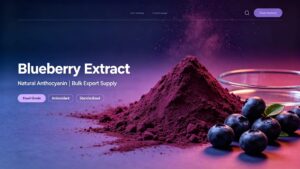
1. Reasons for Continuous Global Demand for Blueberry Extract
Driven by the global Clean Label trend, Blueberry Extract has become a staple raw material for overseas health supplements, functional foods and natural cosmetics, owing to its standardized anthocyanin content, inherent antioxidant properties and natural purplish-red pigment.
Compared with fresh blueberries, concentrated extracts bring prominent commercial advantages for bulk buyers:
– Highly concentrated form reduces volume, cutting international shipping and overseas warehousing expenses significantly;
– Low-temperature extraction preserves active ingredients steadily, free from seasonal quality fluctuations of fresh fruits;
– Available in regular powder and water-soluble modified powder, compatible with both solid and liquid formulations;
– Natural anthocyanins deliver native purplish-red color to replace synthetic colorants, complying with natural ingredient regulations across Europe and North America.
2. Basic Parameters & Commercial Standard Specifications of Blueberry Extract
Raw materials are sourced from ripe highbush blueberries (Vaccinium corymbosum), mainly whole fruit pulp without leftover peels or pomace to guarantee consistent composition.
2.1 Core Active Ingredients
The primary functional compounds are anthocyanin glycosides (cyanidin, delphinidin, petunidin), combined with total polyphenols, quercetin, chlorogenic acid and natural vitamin C to form a comprehensive antioxidant complex.
2.2 Main Standard Specifications In Stock
– Anthocyanin content tested by UV: 5%, 10%, 25%, 36%; HPLC fingerprint analysis available for high-end customized orders
– Common extraction ratios: 5:1, 10:1, 20:1
– Appearance: Fine deep purple-red powder with mild natural blueberry aroma; Moisture ≤5%
– Quality control: Heavy metals, microorganisms, pesticide residues and residual solvents comply with international export limits
2.3 Compliant Commercial Positioning
Only described as formulation ingredients: natural antioxidant, natural colorant & flavor enhancer. In finished dietary products, it is commonly applied in formulas for antioxidant support, microcirculation maintenance and daily eye care.
3. Four Major Downstream Application Scenarios
3.1 Dietary Supplements
Commonly used in eye-care hard capsules, multi-antioxidant tablets, oral powder sticks and effervescent tablets, often compounded with lutein and grape seed extract. Water-soluble modified variants fit oral liquids and portable strip powders.
3.2 Functional Foods & Beverages
Zero-sugar sp
arkling drinks, fermented yogurt, meal replacement powder, baked snacks and low-sugar jams, positioned for Clean Label branding.
3.3 Natural Skincare & Color Cosmetics
Polyphenols are added into masks, serums and creams for antioxidant formulations; fine purple powder serves as natural pigment for makeup tinting.
3.4 Natural Food Colorants for Food Industry
Replaces synthetic pigments in dairy products, gummies and canned foods to meet international natural ingredient standards.
4. Common Risks When Sourcing Blueberry Extract Overseas
Purchasing, QC and R&D teams frequently encounter five typical sourcing pitfalls, which are core criteria to select reliable suppliers:
1. Inconsistent anthocyanin levels: Low-cost raw materials undergo high-temperature drying leading to active ingredient degradation, resulting in color deviation and unstable antioxidant effects in finished goods;
2. Adulteration risk: Some suppliers counterfeit blueberry anthocyanins with pigment from purple sweet potato or black rice, failing third-party HPLC verification;
3. Poor water solubility: Conventional powder clogs and precipitates in water, incompatible with liquid formulas like beverages and oral solutions;
4. Incomplete export documents: Missing batch-specific COAs and pesticide test reports cause customs clearance delays overseas;
5. Seasonal raw material shortage leads to unstable capacity among small manufacturers, causing delayed bulk orders.
5. Standardized QC & Stable Export Supply System
We establish full-chain quality control to solve universal sourcing pain points, differentiated from trading intermediaries and small extraction workshops:
1. Raw material traceability: Fresh berries from designated orchards; low-temperature ethanol extraction + macroporous resin purification plus freeze spray drying to retain maximum anthocyanin activity;
2. Dual testing standards: UV quantification for regular batches; HPLC anthocyanin fingerprint available for premium orders; Certificate of Analysis (COA) provided per batch, supporting third-party overseas inspection;
3. Flexible customizable specifications: Regular anthocyanin grades kept in stock; water solubility & content modification available; small trial orders for R&D and large bulk export orders are both acceptable;
4. Light & oxygen-block export packaging: Inner nitrogen-filled vacuum aluminum foil bag + outer standard 25kg fiber drum; stored in constant-temperature dry warehouse, shelf life reaches 24 months under sealed storage;
5. Complete customs clearance documents: Commercial invoice, packing list, certificate of origin supplied on request; ISO, Kosher, Halal certificates available upon demand.
6. Practical Sourcing Selection Advice
1. Basic coloring & general antioxidant food formulas: Choose standard grades with 5%–10% anthocyanins;
2. Eye-support supplements & premium antioxidant health products: Opt for HPLC standardized anthocyanin (25% / 36%);
3. Liquid formulas (beverages, oral liquids): Prioritize water-soluble modified blueberry extract;
4. Long-term mass-production brands: Cooperate with stable-capacity manufacturers with long-term contracts to lock price & lead time.
Frequently Asked Questions (FAQ)
Can you provide product samples?
Small test samples are available for formulation development; buyers only bear international shipping cost, with matched batch COA attached to samples.
Is MOQ flexible?
Flexible minimum order quantity for small R&D trial orders, with full-scale production capacity for large bulk shipments.
What is the shelf life under proper storage?
24 months when sealed and stored in cool, dry, dark and oxygen-free conditions.
Inquiry & Call to Action
Feel free to contact us via website channels for specification sheets, test samples, bulk quotations and formulation technical support. We supply standardized blueberry extract in bulk for health food, supplement and cosmetic manufacturers worldwide, offering region-specific compliant ingredient solutions for EU, North America and Southeast Asian markets for long-term stable cooperation.