
What Is Emodin? Its Benefits, Sources, Compliance & Safety Issues
Emodin: All Your Questions on Benefits, Safety & Applications Answered
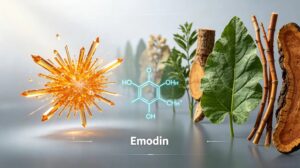
In the fields of botanical extracts, health‑care raw materials and pharmaceutical ingredients, emodin, a popular anthraquinone compound, raises many common questions among global buyers, formulators and industry professionals. What exactly is emodin? What are its real‑world applications? Can it reduce cortisol levels? Is it a laxative? What are its critical safety risks?
As a professional supplier of high‑purity botanical extracts, this article answers all your key questions in a clear Q&A format. We avoid overly academic language while maintaining professionalism and compliance, offering reliable references for your raw material sourcing and product development.
1. What Exactly Is Natural Emodin?
Chemically named 1,3,8‑trihydroxy‑6‑methylanthraquinone, emodin is a natural anthraquinone compound. It appears as orange‑yellow needle‑shaped crystals with a bitter taste. It is insoluble in water but soluble in organic solvents such as ethanol and acetone, making industrial extraction and purification feasible.
As a signature active compound in Polygonaceae and Leguminosae medicinal plants, emodin is mainly extracted from rhubarb, polygonum cuspidatum, polygonum multiflorum, cassia seed, senna and aloe vera. These herbs have been used in traditional Chinese medicine for thousands of years. Today, emodin is widely studied and applied in natural medicine, dietary supplements and cosmetic additives across pharmaceutical, health‑care and daily‑chemical industries.
2. What Are the Core Functions & Industrial Applications of Emodin?
2.1 What Is Emodin Used for in Traditional Herbal Medicine?
In traditional Chinese medicine, emodin‑rich herbs are applied to remove heat, promote diuresis, detoxify, relieve constipation and reduce swelling. Clinically, they are used for heat‑type constipation, damp‑heat jaundice, skin abscesses and inflammatory swelling. Topically, emodin helps ease skin inflammation, eczema, acne and mild burn reactions with well‑documented clinical experience.
2.2 What Practical Benefits Does Emodin Offer in Modern Industry?
– Antibacterial & anti‑inflammatory effects
Emodin inhibits common pathogens including Staphylococcus aureus, Escherichia coli and various fungi. It reduces inflammation inside and outside the body, making it a preferred raw material for gut‑health supplements and topical skincare products.
– Liver‑protective and cholagogic effects
It alleviates liver cell damage, promotes bile secretion and improves cholestasis, showing great potential for liver‑support supplement development.
– Metabolic regulation & antioxidant activity
Cell and animal studies confirm emodin helps regulate blood lipids and blood sugar while scavenging free radicals. It is widely researched for anti‑aging skincare and metabolic health products.
– Intestinal regulation & laxative function
As a natural laxative component, emodin stimulates intestinal peristalsis and increases intestinal fluid secretion to soften stools. It serves as a natural alternative to synthetic laxatives for clean‑label digestive health products.
– Anti‑tumor research potential
In‑vitro and animal experiments show emodin inhibits proliferation and induces apoptosis in certain cancer cells. However, this is only at the research stage and cannot be marketed as anti‑cancer medicine, limited to R&D and laboratory use.
3. Can Emodin Really Lower Cortisol Levels?
Current evidence supporting cortisol regulation is limited to basic laboratory research, with no large‑scale human clinical trials completed. Emodin cannot be marketed as a dedicated cortisol‑reducing ingredient.
In cell and animal stress models, emodin suppresses over‑activation of the hypothalamic‑pituitary‑adrenal (HPA) axis and reduces excess cortisol secretion under stress, showing potential anti‑stress and anti‑anxiety effects. Due to insufficient human clinical data and potential hepatorenal toxicity, self‑medication with emodin or emodin‑rich herbs for cortisol control is strictly prohibited. Industrial applications for this function are restricted to early‑stage research only.
4. Which Foods or Plants Are Rich in Emodin?
Ordinary daily foods contain only trace amounts of emodin, far below effective industrial concentrations. High‑content emodin is mainly sourced from specific medicinal plants:
– High‑concentration raw materials: Rhubarb, Polygonum cuspidatum, Prepared Polygonum multiflorum, Cassia Seed, Senna, Aloe Vera (primary industrial extraction sources)
– Trace‑content sources: Spinach, mulberry, fig and some legumes (negligible levels with no industrial value)
Important reminder: Rhubarb, polygonum multiflorum and senna must not be consumed long‑term as regular food. Excessive intake may cause liver/kidney damage and melanosis coli. Industrial production requires standardized, compliant raw materials.
5. Is Emodin a Laxative? Is Long‑Term Use Safe?
Emodin is a typical natural stimulant laxative and the key active ingredient behind the laxative effects of rhubarb and senna.
It directly stimulates colonic mucosa, accelerates intestinal movement and boosts fluid secretion for fast bowel movement. However, long‑term abuse leads to severe side effects: intestinal dependence, melanosis coli, recurrent abdominal pain, diarrhea, electrolyte imbalance and dehydration, plus increased liver and kidney burden. In industrial applications, emodin is suitable only for occasional constipation relief products, not for long‑term daily gut care, and must be dosed strictly.
6. Which Laxative Works Fastest & Strongest? Where Does Emodin Rank?
Different laxatives vary greatly in onset speed, potency and safety for formulation selection:
– Fastest & strongest (emergency medical grade): Oral magnesium sulfate
A powerful osmotic laxative working in 1–2 hours. Used only for colon preparation before endoscopy or emergency poisoning treatment. High risk; never for consumer supplements.
– Fast‑acting stimulant laxatives: Emodin, senna extract, bisacodyl
Onset in 4–8 hours with strong bowel‑stimulating effects. Risk of abdominal discomfort and dependence; for occasional use only.
– Mild & safe laxatives: Lactulose, macrogol 4000
Onset in 12–24 hours, non‑irritating and non‑habit‑forming. The top choice for long‑term daily gut‑health supplements.
7. What Are the Safety Boundaries & Compliance Requirements for Emodin Use?
1. Emodin is intended only as an industrial raw material for pharmaceuticals, health‑care products, cosmetics and research materials. It must not be taken casually as ordinary food or daily supplements.
2. Long‑term or excessive intake causes liver/kidney damage and intestinal dysfunction. All applications must comply with regional dosage standards and safety regulations.
3. Prioritize mild natural ingredients or safe synthetic laxatives for constipation formulations. R&D targeting cortisol regulation, anti‑inflammation or liver support must follow professional medical and scientific guidance.
Conclusion
Emodin is a high‑value natural active ingredient with multiple benefits yet clear usage limits. Proper selection and compliant application maximize its industrial potential.
As a trusted supplier of standardized emodin extract, we provide high‑purity products meeting international quality standards, with support for third‑party testing and custom specifications, plus complete COA and compliance documents. If you have sourcing inquiries or formulation collaboration needs, feel free to contact us for a one‑stop botanical raw material solution.