Category: Supplement Ingredients
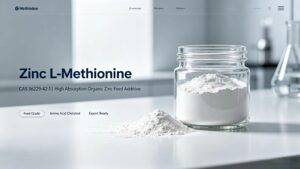
Zinc L-Methionine CAS 56329-42-1 | High Absorption Amino Acid Chelated Organic Zinc Feed Additive For Export
Feed formulators, large-scale breeding farms and premix traders across the globe have long struggled with traditional inorganic zinc sources like zinc sulfate and zinc oxide. These raw materials feature low absorption rates, requiring higher dosage and raising overall feed costs. Inorganic zinc easily binds with phytic acid in feed to form insoluble precipitates, resulting in excessive zinc discharge in manure that fails to meet EU environmental regulations for livestock farming. Animals fed diets with inorganic zinc commonly suffer from slow growth, poor hair coat, weakened immunity and declined reproductive performance.
As a new-generation amino acid chelated organic zinc with stable five-membered ring structure, Zinc L-Methionine (CAS 56329-42-1) boasts a bioavailability 2–4 times higher than conventional inorganic zinc. It simultaneously supplies two key nutrients: zinc trace elements and L-methionine amino acids. Widely recognized by breeding manufacturers in North America, the EU and Southeast Asia, this compliant organic zinc raw material is applicable to livestock feed, pet food, aquaculture premix, food fortifiers and pharmaceutical nutritional supplements.
This guide covers complete technical specifications, core competitive advantages of chelate structure, practical breeding data for various animals, global export supply solutions, storage guidelines and frequently asked procurement questions. It serves as a professional sourcing reference for overseas feed buyers, formulators and farm groups, with all products complying with international feed additive import standards.
1. Complete Technical Specifications of Zinc L-Methionine
1.1 Physical, Chemical & Storage Standards
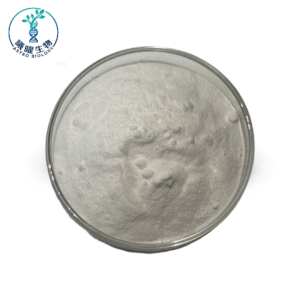
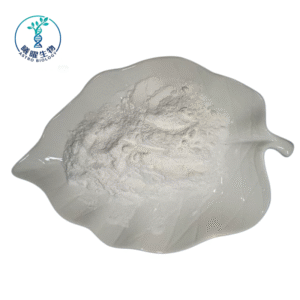
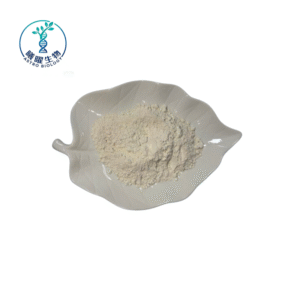
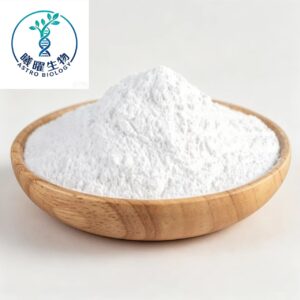
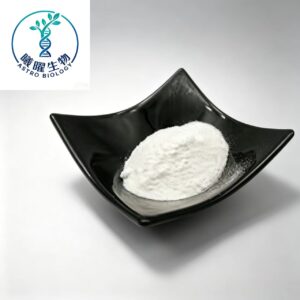
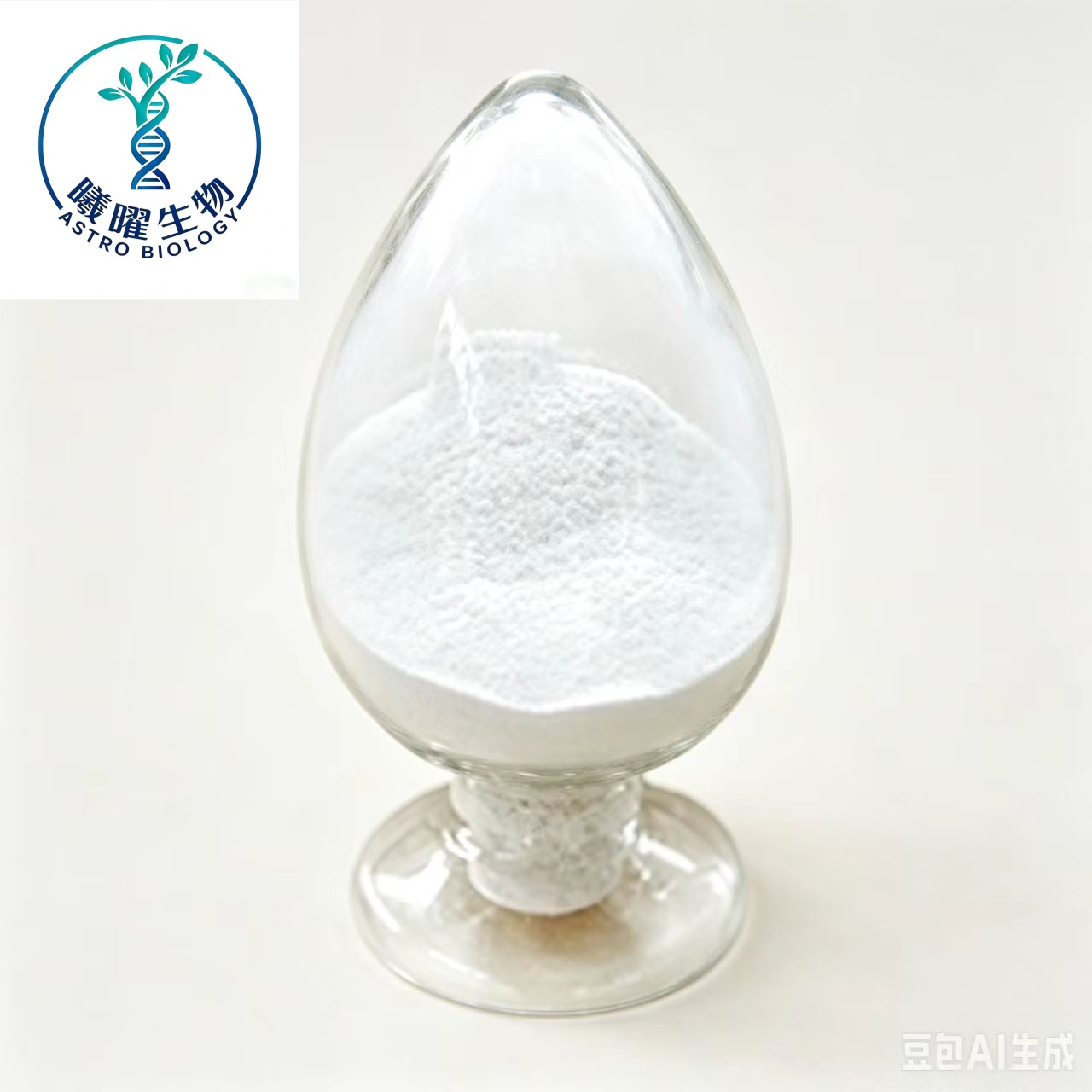
Appearance: White to off-white free-flowing homogeneous powder with mild characteristic L-methionine odor
Solubility: Insoluble in water and ethanol; soluble in dilute acid and dilute alkali solutions
Chemical Structure: Zinc cations form coordinate bonds with amino and carbonyl groups to build stable five-membered rings, delivering outstanding chemical and biochemical stability
Storage Requirements: Seal and store under inert atmosphere at room temperature away from sunlight; separate from oxidants and damp raw materials
2. Core Advantages vs Traditional Inorganic Zinc
Global feed formulators prioritize absorption efficiency, breeding economic benefits, formula compatibility and environmental compliance when sourcing organic zinc. Zinc L-Methionine holds irreplaceable strengths:
1. Dual Nutrient Co-Absorption of Zinc & L-Methionine
With L-methionine as the chelation carrier, the complete chelate molecule is fully absorbed in animal intestines without secondary decomposition. It simultaneously provides essential trace zinc and L-methionine for protein synthesis, maximizing feed nutrient utilization.
2. Ultra-High Bioavailability to Cut Breeding Costs
The stable five-membered ring avoids antagonistic precipitation with phytic acid and oxalic acid in feed. Its zinc absorption rate is 2–4 times that of zinc sulfate and zinc oxide. Lower dosage achieves equal breeding performance, directly reducing total feed formulation expenditure.
3. Wide Formula Compatibility for Full Feed Production Lines
Resistant to acid, alkali and high temperatures; it remains stable during pelleting, extrusion and long-term storage without damaging active nutrients such as vitamins and oils. The free-flowing powder prevents caking and fits fully automatic feed mixing equipment perfectly.
4. Comprehensive Improvement of Livestock Production Indicators & Lower Breeding Losses
Zinc forms the core component of hundreds of metalloenzymes and insulin in animals, participating in DNA, RNA and protein metabolism. Long-term dietary supplementation optimizes hair coat and bone development, boosts reproductive performance and appetite, activates immune cells, and drastically reduces risks of skin diseases, incomplete embryonic development, growth retardation and mass infectious diseases.
5. Low Zinc Emission to Meet Global Eco-Farming Regulations
Enhanced zinc absorption cuts residual zinc in livestock manure significantly, satisfying strict heavy metal discharge standards for breeding in EU and North America, ideal for feed manufacturers exporting finished feeds.
3. Practical Application Performance on Different Livestock
3.1 Poultry
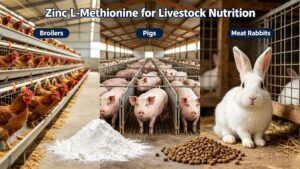
Intensive poultry farming often faces weak anti-stress immunity, limb deformities, poor meat quality and high feed waste. Verified results after adding Zinc L-Methionine to diets:
– 45-day broilers: Improved feed conversion ratio, higher breast meat yield, reduced skin damage and enhanced bone mineral deposition;
– 120-day turkeys: Lower overall mortality rate, fewer leg deformities and stronger anti-stress capacity during breeding and transportation.
3.2 Finishing Pigs & Breeding Sows
Zinc regulates pig appetite, digestion, metabolism, reproduction and immunity. Authorized breeding trials show that finishing pigs fed Zinc L-Methionine achieve a 9.7% higher average daily weight gain and 3.3% better feed utilization rate, along with improved slaughter and lean meat percentage. For breeding sows, it supports complete embryonic development and higher piglet survival rates.
3.3 Targeted Dosage Plan for Meat Rabbits
Mononuclear phagocyte activity in meat rabbits relies heavily on sufficient zinc supply, and zinc deficiency directly weakens disease resistance. The recommended dietary addition dosage is 50mg/kg feed:
1. Accelerate weight gain and shorten slaughter cycle of meat rabbits;
2. Stabilize cellular immune defense system to reduce skin and intestinal bacterial infection risks;
3. The chelated structure steadily releases zinc ions under intestinal pH, enabling 2–3 times faster absorption than inorganic zinc salts.
4. Full-Spectrum Application Fields
1. Feed Industry
Complete feed, premix and composite trace mineral additives for chickens, pigs, rabbits, ruminants, aquaculture fish & shrimp, and cat & dog pet food formulas.
2. Food Nutritional Fortification
Food-grade zinc fortifier processed into tablets or powder to supplement zinc and L-methionine for human nutrition.
3. Pharmaceutical & Health Supplement Raw Material
Used for medical nutritional formulas and dietary supplements as a mild, easily digestible organic zinc source.
5. Core Export Advantages of Our Manufacturing Factory
We are a professional manufacturer specializing in amino acid chelated trace minerals, mass-producing export-grade Zinc L-Methionine to meet global demand from feed traders, brand producers and large breeding farms:
1. Strict Quality Control: Independent COA test reports for every batch with third-party HPLC testing to guarantee stable batch data and zero adulteration.
2. Complete International Export Certifications: MSDS, GMP, ISO, Kosher and Halal certifications for smooth customs clearance in all countries.
3. Flexible Sourcing Options: Small test samples from 100g to 1kg and full-container bulk orders packed in 25kg fiber drums are both available; custom outer packaging labels are supported.
4. Year-Round Safe Inventory: Standardized constant-temperature storage with long-term annual framework order acceptance to guarantee stable lead times and avoid production delays.
5. Free Professional Technical Support: English & Chinese formula dosage references are provided, with online consultation on chelate trace mineral matching and compliance issues.
If you need test samples, the latest factory quotation or complete English specification datasheets, leave a message on this page or email our foreign trade team for support.
6. Storage & Industrial Usage Precautions
1. Store sealed products in cool, ventilated and dry warehouses, separately stacked from oxidants, strong acids and strong alkalis.
2. Avoid prolonged exposure to high temperature and sunlight; finish usage quickly once packaging is opened to prevent moisture caking.
3. Mix evenly during feed processing; compatible with vitamins and various amino acid additives.
7. Frequently Asked Global Procurement Questions
Q1: What is the core difference between Zinc L-Methionine and zinc sulfate?
A: Zinc sulfate is inorganic ionic zinc that easily forms insoluble precipitates with phytic acid in feed, leading to low animal absorption. Zinc L-Methionine features a stable five-membered amino acid chelate ring that resists interference from feed ingredients, delivering 2–4 times higher absorption efficiency while supplying extra L-methionine. Long-term application cuts overall breeding costs and complies with global environmental laws.
Q2: Does Zinc L-Methionine meet feed export compliance standards for Europe and America?
A:Heavy metal and harmful residue indexes fully comply with feed additive regulations in Europe and North America. Complete testing documents and international certifications support import filing and customs inspection worldwide.
Q3: Are free test samples available? What is the minimum order quantity?
A: Small-sized samples are offered for overseas formulator trials with flexible order thresholds for both lab testing and full-container bulk export cooperation.
Q4: Besides livestock feed, can Zinc L-Methionine be used in pet food and aquaculture feed?
A: Yes, it works for all formulas including poultry, swine, meat rabbits, aquatic fish & shrimp, and cat & dog pet food, suitable for all refined breeding nutrition formulas.